
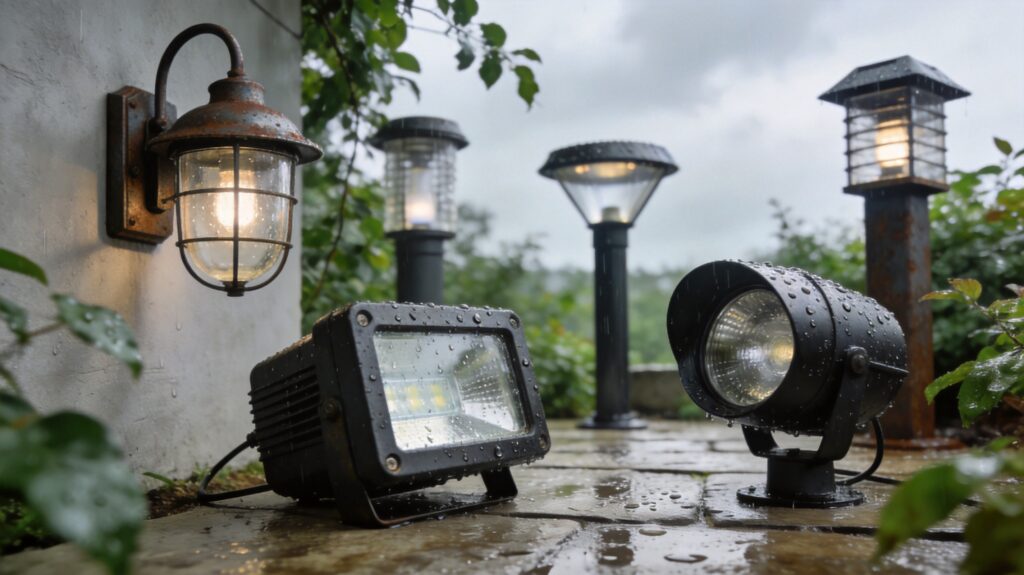
How to Choose Outdoor Light Fixtures That Withstand Rain, Rust, and Humidity
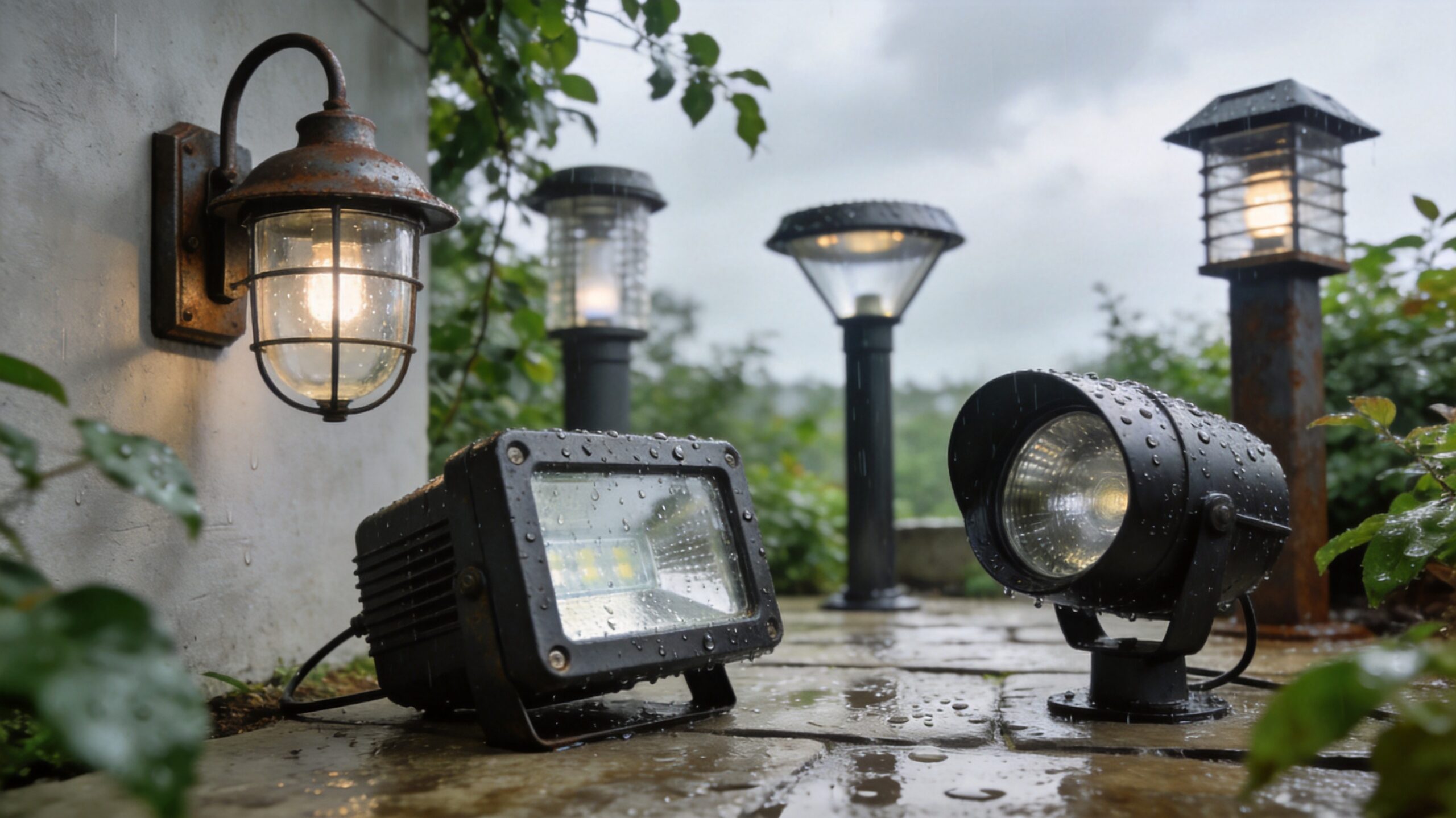
Outdoor lighting is a significant investment for any commercial property, hospitality venue, or municipal project. Yet, all too often, facility managers and contractors watch premium-priced fixtures fail within a few seasons, plagued by corrosion, water ingress, and premature burnout. The culprit is rarely the bulb or the design—it is the environment. Rain, salt-laden air, and persistent humidity are relentless adversaries that will compromise any outdoor light fixture that isn’t specifically engineered for the fight. This guide provides a technical, procurement-focused roadmap to selecting outdoor lighting fixtures that deliver reliable performance and a strong return on investment, even in the harshest weather conditions.
Why Outdoor Light Fixtures Fail in Wet Environments
Understanding why fixtures fail is the first step toward making smarter purchasing decisions. The degradation process is not random; it follows predictable patterns driven by material science and physics. For a deeper dive into the technical aspects of material durability, you can consult this industry reference on materials used in outdoor applications.
Common Causes of Rust and Corrosion
Rust is the most visible enemy of outdoor lighting. It occurs when ferrous metals—iron and steel—react with oxygen and moisture. However, corrosion isn’t limited to steel. Even aluminum, while naturally resistant, can suffer from galvanic corrosion when paired with incompatible metals like brass or copper in the presence of an electrolyte (water). Salt spray from coastal environments accelerates this process exponentially, eating through protective coatings and compromising structural integrity. Cheap fasteners and screws are often the first point of failure, as they are frequently made from low-grade steel that rusts from the inside out.
How Humidity and Condensation Damage Internal Components
While rain is an obvious threat, humidity is a silent killer. When warm, moisture-laden air enters a fixture during the day and cools at night, it condenses into water droplets inside the housing. This trapped moisture leads to internal corrosion of electrical contacts, short circuits, and the premature failure of LED drivers and circuit boards. Even fixtures marketed as “sealed” can suffer from a “breathing” effect, where temperature fluctuations create internal pressure that sucks in moist air through microscopic gaps in gaskets.
Key Specifications for Weatherproof Outdoor Lighting Fixtures
To avoid these failures, you must move beyond aesthetics and focus on hard engineering specifications.
IP Ratings: What They Mean for Rain and Moisture
The Ingress Protection (IP) rating is your first filter. The first digit (0-6) rates protection against solid particles like dust; the second digit (0-8) rates protection against liquids. For outdoor use, you should never accept less than IP65. This rating guarantees protection against low-pressure water jets from any direction—sufficient for rain. However, for fixtures located in areas prone to flooding, power washing, or heavy sea spray, an IP66 or IP67 rating is recommended. IP67 offers protection against temporary immersion, making it ideal for ground-level bollards in areas with poor drainage.
Material Selection: Aluminum, Stainless Steel, and Powder-Coated Finishes
The housing material determines the fixture’s structural lifespan. Die-cast aluminum is the industry standard for its excellent corrosion resistance and thermal management (it dissipates heat from LEDs effectively). However, the finish matters more than the base metal. A high-quality powder-coated finish—applied electrostatically and baked on—provides a thick, durable barrier against moisture and UV degradation. For coastal applications, opt for 316-grade stainless steel hardware. Unlike 304 grade, 316 contains molybdenum, which provides superior resistance to chloride-induced corrosion from saltwater.
Sealing and Gasket Quality for Condensation Resistance
The “sealed” nature of a fixture is only as good as its gaskets. Look for fixtures that use silicone gaskets rather than rubber or foam, as silicone maintains its elasticity across a wider temperature range and resists UV degradation. Furthermore, the best fixtures feature pressure-equalization vents or “breathable” membranes. These allow the fixture to equalize internal pressure without allowing water molecules to pass through, effectively eliminating the condensation problem without compromising the IP rating.
Comparing Outdoor Light Fixtures by Application
Different zones of a property face different microclimates. Your specification strategy should reflect these nuances.
String and Curtain Lights for Covered Patios
For covered areas, the primary threat is ambient humidity rather than direct rainfall. Here, you can utilize outdoor light fixtures with a lower IP rating (IP44) but must prioritize UV-stabilized PVC or rubber housing to prevent cracking. Ensure the sockets are sealed and the plugs are weatherproof. These fixtures are ideal for creating ambiance in restaurants and event spaces without the need for heavy-duty armor. For example, our outdoor patio decorative lights are designed with weather-resistant materials suitable for covered outdoor settings.
Wall-Mounted and Post-Top Fixtures for Exposed Areas
These fixtures face the full brunt of wind-driven rain. They must have a drainage channel in the housing design to allow any water that does enter to escape, rather than pooling. Look for fixtures with a “drip shield” design that protects the gasket line. For post-top fixtures, ensure the mounting pole has a weep hole at the base to allow condensation to drain, preventing water from rising up into the fixture head.
Bollard and Path Lights for Ground-Level Humidity
Ground-level fixtures are subjected to splashing water, mud, and standing puddles. They require a minimum of IP65, but IP67 is preferable. The lens material is critical here; tempered glass is superior to polycarbonate, which can yellow and become brittle with UV exposure. Additionally, the ingress point for wiring must be sealed with a waterproof gland—not just a rubber plug—to prevent water from wicking up the cable and into the driver compartment.
How to Source Durable Outdoor Lighting Fixtures for B2B Projects
Procurement is about risk mitigation. Here is how to vet suppliers to ensure you are getting a product that will last. You can also review our FAQs for common questions about our manufacturing processes and quality assurance.
Evaluating Manufacturer Certifications and Testing Standards
Do not rely on marketing claims. Demand to see UL 1598 (for luminaires) and UL 8750 (for LED equipment) certifications. For international projects, look for IEC 60598 compliance. More importantly, ask for ISTA (International Safe Transit Association) test reports, which prove the fixture can survive shipping without micro-cracks that lead to future water ingress. A manufacturer who cannot provide third-party test data is a liability. For additional technical reference on testing standards, consult Engineering360’s database.
Balancing Cost vs. Longevity in Bulk Purchasing
The lowest bid is rarely the lowest total cost of ownership. A fixture that costs 30% more but lasts three times longer will save you significantly on labor costs for replacement and warranty callbacks. When comparing quotes, calculate the L70 lifespan (the hours until the LED output degrades to 70%) and the warranty terms. A 5-year warranty backed by a financially stable manufacturer is worth more than a 2-year warranty on a cheaper unit.
Requesting Samples for Salt Spray and Moisture Tests
Before committing to a bulk order, request a sample and conduct your own due diligence. Perform a salt spray test (ASTM B117) on a small batch to see how the finish holds up. More practically, place the fixture in a freezer overnight and then bring it into a warm, humid room. If condensation forms inside the lens, the sealing is inadequate. This simple test can save you from a catastrophic installation failure.
Installation and Maintenance Best Practices for Longevity
Even the best fixture will fail if installed incorrectly. Proper installation is the final line of defense.
Proper Mounting to Prevent Water Trapping
Always mount fixtures so that the glass or lens is angled downward or at a slope that allows water to run off. Never mount a wall fixture flat against the wall without a spacer or gasket that allows airflow behind it. Water trapped between the fixture and the wall is a recipe for premature corrosion of the mounting plate.
Using Weatherproof Connectors and Conduits
The wiring connection is the most vulnerable point. Use wet-rated wire nuts and fill the connection with silicone dielectric grease. For underground or exposed runs, use liquid-tight flexible conduit. Never rely on electrical tape alone; it degrades quickly in UV light and leaves a sticky residue that attracts dirt and moisture.
Seasonal Maintenance to Extend Fixture Lifespan
Implement a bi-annual inspection schedule. Clean the lenses with a non-abrasive cleaner to remove salt and mineral deposits. Inspect gaskets for cracking or hardening, and replace them at the first sign of wear. Finally, check the weep holes—if they are clogged with dirt or insect nests, water will accumulate inside the housing and destroy the electronics.
Frequently Asked Questions About Outdoor Light Fixtures
What IP Rating Is Best for Rainy Climates?
For general rainy climates, IP65 is the minimum standard. However, if your project is in a region with heavy monsoons, typhoons, or frequent power-washing, upgrade to IP66 for wall and post fixtures. For any fixture mounted lower than 12 inches from the ground, choose IP67 to guard against standing water.
Can Aluminum Outdoor Fixtures Rust Over Time?
Pure aluminum does not rust (that term applies to iron), but it does oxidize. This oxidation forms a protective layer, but it can cause pitting and discoloration. The real risk is galvanic corrosion where aluminum meets steel fasteners. To prevent this, ensure all mounting hardware is stainless steel and that the aluminum is properly powder-coated or anodized to seal the surface.
How Do I Prevent Condensation Inside Sealed Fixtures?
You cannot prevent the ingress of humid air entirely, but you can prevent the damage. Look for fixtures with Gore-Tex® or similar breathable vents. These vents allow the fixture to “breathe,” equalizing pressure and releasing moisture vapor while blocking liquid water. If your fixture lacks a vent, you can add a desiccant pack inside the housing, but this is a temporary fix that requires annual replacement.
Selecting outdoor lighting fixtures that withstand the elements is a matter of specification discipline, not luck. By prioritizing IP ratings, material science, and rigorous testing, you can dramatically reduce maintenance costs and ensure your property remains beautifully lit for years to come. If you’re planning a large-scale project, explore our full range of products or contact us for custom solutions tailored to your environmental requirements.